July 17, 2026
DESIGN AWARDS, EXPLAINED: WHAT WINNING ONE ACTUALLY MEANS FOR A BRAND
"We won a design award" sounds impressive in a pitch deck — but the term covers everything from a global jury of hundreds to a regional list nobody outside the entrant pool has heard of. Here's what four of the most recognized design awards actually represent, and what changes for a brand that wins one.
Why "We Won a Design Award" Doesn't Tell You Much on Its Own
Every studio's about page has a line like it: awards won, a small trophy icon, the year. It reads as proof. But "we won a design award" is a sentence that means almost nothing until you know which award, which category, and how many entries it beat out.
That's the gap this piece is here to close. Not "which design award is the best" — there isn't a single answer, and treating it that way misses how differently each of these programs actually works. Some reward craft. Some reward a body of work built over a career. Some are built entirely around one medium. Knowing the difference is what lets you read someone else's trophy shelf, or decide whether to build your own.
Five Design Awards Worth Knowing
Design awards for brands come in more shapes than most people realize. These five are a reasonable starting map — not a ranking, just five different lenses on what "recognized design work" can mean.
ADC Awards (The One Club for Creativity)
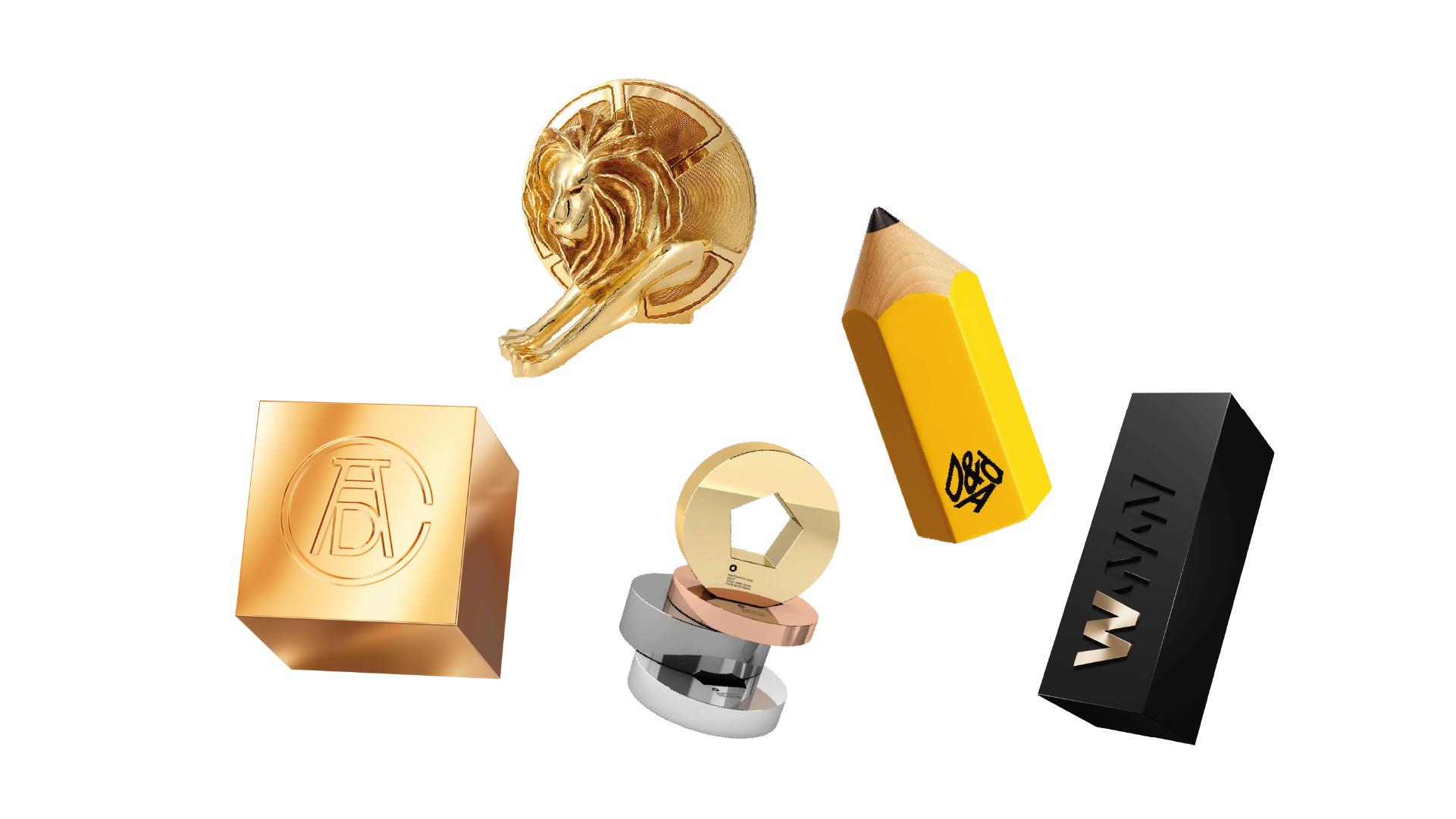
The ADC Awards trace back to the Art Directors Club, one of the oldest organizations in the industry, now run under The One Club for Creativity alongside The One Show. The focus has always leaned toward craft and art direction — typography, illustration, photography, the details that separate a well-made piece from a merely functional one. For a brand, an ADC nod says the execution held up under a jury that cares specifically about craft, not just concept.
D&AD Awards
D&AD works on a system that's become part of the industry's shorthand: Wood, Graphite, Yellow, and Black Pencils, in ascending order of rarity. A Yellow Pencil already carries real weight; a Black Pencil is rare enough that some years none get awarded at all. D&AD's categories span both advertising and design broadly, judged by large juries pulled from across the industry — which makes it less about one medium and more about creative work in general.
Awwwards
Awwwards is the one that lives entirely in a browser. It recognizes websites through daily, monthly, and yearly tiers — Site of the Day, Site of the Month, Site of the Year — and it's the award most directly tied to a brand's actual digital presence rather than a campaign or a one-off piece. If a brand's site is the thing doing the talking, this is the recognition that speaks to it directly.
Cannes Lions — Design Lions
Cannes Lions is the one people outside the industry have actually heard of, largely thanks to its overlap with the Cannes Film Festival's name recognition. The Design Lions category covers brand identity, rebranding, packaging, and product design specifically, judged as part of the larger festival. It's the largest of the five in scale and reach, which makes it the one most likely to translate into recognition beyond design circles — though that scale comes with its own costs, which we'll get to.
Pentawards
Pentawards is the specialist of the group: a global competition built entirely around packaging design, judged by a jury that mixes agency creative directors with in-house design leads from companies like Coca-Cola, P&G, and Nestlé. Awards run in five tiers, from Bronze up to Diamond, and fewer than one in five entries wins anything. For a brand where the packaging is doing most of the talking on shelf, Pentawards is the recognition built specifically around that job.
What Winning One Actually Changes for a Brand
None of these awards move sales directly. Nobody chooses a product because its packaging won a Pencil. What they do move is quieter, but real.
Credibility is the first one. A design award functions as an external signal in a market where "good design" is genuinely hard to evaluate from the outside. A prospective client, or a designer considering a job offer, can't sit through a full portfolio review — a recognized award is a shortcut that says a qualified jury already did that work.
The second is recruiting and retention. Talented designers want proof that the work they'd be doing is taken seriously, and a shelf of recognized wins is part of that proof — probably more for the studio behind the brand than for the brand itself.
The third is press. Design awards get covered, referenced, and linked to by outlets that follow the industry, which is attention a brand doesn't otherwise get for a rebrand or a new site launch on its own.
The Part Nobody Explains: Entry Costs and What They Buy You
Here's the part that rarely gets said out loud: most of these awards charge to enter, and the range is wide. Awwwards keeps its entry accessible — closer to the cost of a nice dinner than a line item that needs sign-off. Cannes Lions sits at the other end: entry fees per category start in the hundreds of euros and, for some of its more competitive categories, run well past two thousand.
Pentawards works a bit differently: the entry fee itself is modest, but a winner is then required to purchase a Winners' Package, starting around €499, to receive the trophy, credited coverage, and winner assets. It's a different shape of cost than the others, but the same principle applies.
None of it is paying for the trophy itself. It's paying for a qualified jury to actually look at the work, for the exposure that comes with being shortlisted or published in a yearbook, and, in the case of the larger shows, for the infrastructure of running a global competition at all. It's a reasonable trade, as long as the expectation is set correctly: entering doesn't manufacture a strong project. It gives a strong project a chance to be recognized by people whose job is judging craft. A mediocre rebrand doesn't become award-worthy because someone paid to submit it.
Is It Worth Entering?
The honest answer depends less on the award and more on the project. Work that already holds up under scrutiny — a system that's been thought through, not just a nice-looking deliverable — tends to do well regardless of which of these five it's entered into. Work that's still rough around the edges tends to get exposed by the same jury process that makes these awards worth something in the first place.
The distinction that actually matters is what the entry is for. A studio building a portfolio to attract better clients gets real value from craft-focused recognition like ADC or D&AD. A brand whose whole experience lives online has more to gain from Awwwards, where the win points straight at the thing customers actually use. A brand built around packaging — CPG, beauty, beverage — has the clearest case for Pentawards, where the entire jury and category structure exists for exactly that kind of work. And a brand with the budget and the ambition to be seen outside the design industry entirely is the one for whom Cannes Lions' reach starts to make financial sense.
None of that makes one award more legitimate than another. It just means the right one depends on what's actually being built, and who's supposed to notice it.