September 16, 2026
HOSPITALITY BRAND ARCHITECTURE: THE UMBRELLA TAO GROUP BUILT
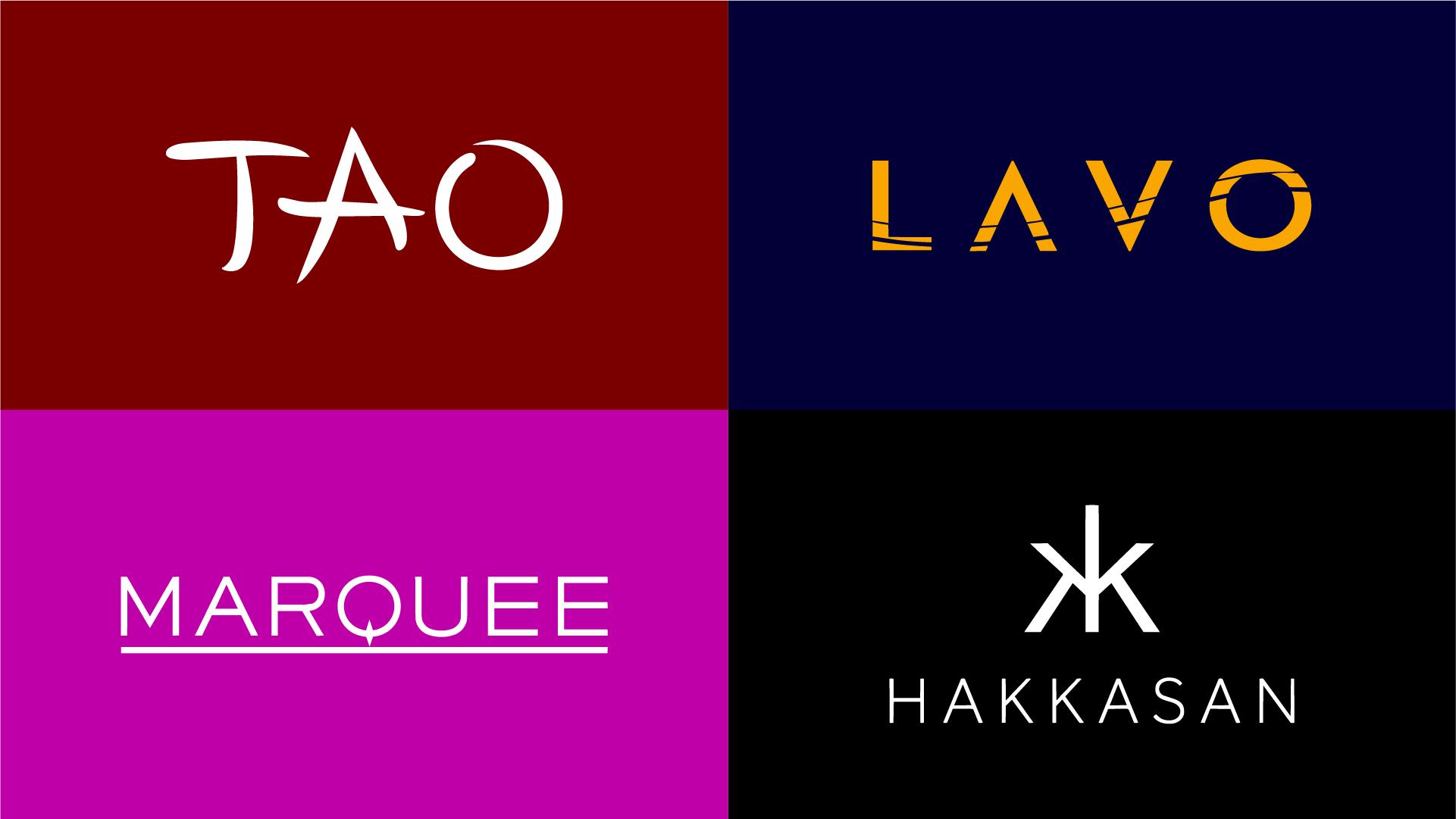
Tao, Lavo, Marquee and Hakkasan share no typeface, no palette, no visible parent brand. And yet nobody in the industry mistakes them for four unrelated businesses. Whatever is holding that portfolio together, it isn't the logo. Here's what it actually is.
Tao, Lavo, Marquee and Hakkasan walk into a portfolio
Put the logos of Tao Group Hospitality's concepts side by side and try to find the family resemblance. You won't. Tao leans into a dramatic, temple-scale theatricality. Lavo reads Italian-American, warmer, looser. Marquee is nightlife first, built for volume and lighting cues. Hakkasan sits in a different register entirely, darker and more restrained.
Four brands, no shared typeface, no shared palette, no visible parent stamped in the corner. And yet nobody in the industry confuses them for four unrelated businesses that happen to share an owner. Operators know the group. Landlords know the group. Chefs and general managers know exactly what it means to be hired into it.
So what is actually doing the work? This is the question that defines hospitality brand architecture, and the answer is almost never the thing you'd expect. What unifies a portfolio is rarely what the guest sees.
The three ways to hold a portfolio together
There are only three real models, and each one costs you something.
Branded house means one name with many rooms. The parent brand is the product, and every new concept extends it. Think of a hotel brand that opens a restaurant under its own name. The upside is enormous: every opening inherits the reputation of the last one, and your marketing compounds instead of restarting. The cost is rigidity. Every new concept drags the expectations of the previous one into the room with it, which means your fourth idea has to be a cousin of your first.
House of brands means independent concepts with an invisible parent. Each brand gets its own name, its own world, its own reason to exist. The guest never thinks about the corporate entity, which is exactly right for nightlife and fine dining, where the last thing anyone wants at the table is a reminder that they're inside a portfolio. The cost is that reputation doesn't transfer. Every launch starts from zero, and you pay full price for awareness each time.
Endorsed brands sit in the middle. The concept leads, and the group signs its name quietly: a line in the footer, a credit on the press page, a mention in the About section. The brand keeps its autonomy, and the group keeps its equity.
Tao operates closest to a house of brands, with a light endorsement layer. The concepts run free, and the group surfaces where it matters. That combination is the default answer for most hospitality groups, and the reason is worth saying plainly: your group's reputation usually has more value among investors, landlords, suppliers and talent than it does among guests. Endorsement works when the people who need to see the parent are not the people eating dinner.
If your group name means nothing to a landlord yet, an endorsement signature is decoration. If it means something, hiding it is leaving money on the table.
What actually stays the same across every concept
Here's the part most groups get backwards. They try to standardize the visible layer (a shared color, a family of logos, a house font) and leave the operating layer to improvise. It should be the opposite.
The things that should be systematized across your entire portfolio are mostly invisible to the guest:
- Production standards. The level of finish in materials, lighting, print and fabrication. This is the single strongest signal of a real group, and guests feel it without naming it.
- Price tier and city type. A group that jumps wildly between segments isn't a portfolio, it's a collection.
- Typographic criteria, not typefaces. Concepts shouldn't share fonts. They should share the logic behind them: how many weights, how hierarchy works on a menu, how small type is allowed to get before it stops being legible in low light.
- Photography standards. Direction, lighting approach, how food is styled, how people appear in frame. This is where portfolios usually fall apart fastest.
- Menu templates. Not the design, the structure. Where prices sit, how sections break, how modifiers read.
- Signage and wayfinding logic. Different materials, same decision-making about placement and legibility.
- Uniforms as a modular system. Different pieces, shared sourcing and quality tier.
- Service tone. How staff greet, correct a mistake, handle a complaint.
And the things that should never be standardized: the name, the palette, the personality, the music, the cultural references, the interiors. That's the layer that has to stay free, because that's the layer the guest is buying.
The rule we give clients is short enough to remember on the way out of the meeting: if the guest sees it, it can vary. If your team uses it to operate, it has to be a system.
Naming the next concept without painting yourself into a corner
Three naming mistakes show up constantly in hospitality groups, and all three come from thinking about the opening instead of the decade.
The first is tying the name to a city. It feels grounded and local right up until the second location, at which point you're explaining why a neighborhood name is now in a different country.
The second is tying the name to a cuisine or format. A name that announces "taqueria" or "steakhouse" is a name that can't follow the concept when the chef evolves it, and concepts always evolve.
The third is derivative naming off the parent: Casa X, then Casa X Norte, then Casa X Express. It reads efficient on a spreadsheet and cheap in the market. Extensions signal downgrade, and by the third one you've trained the audience to expect less.
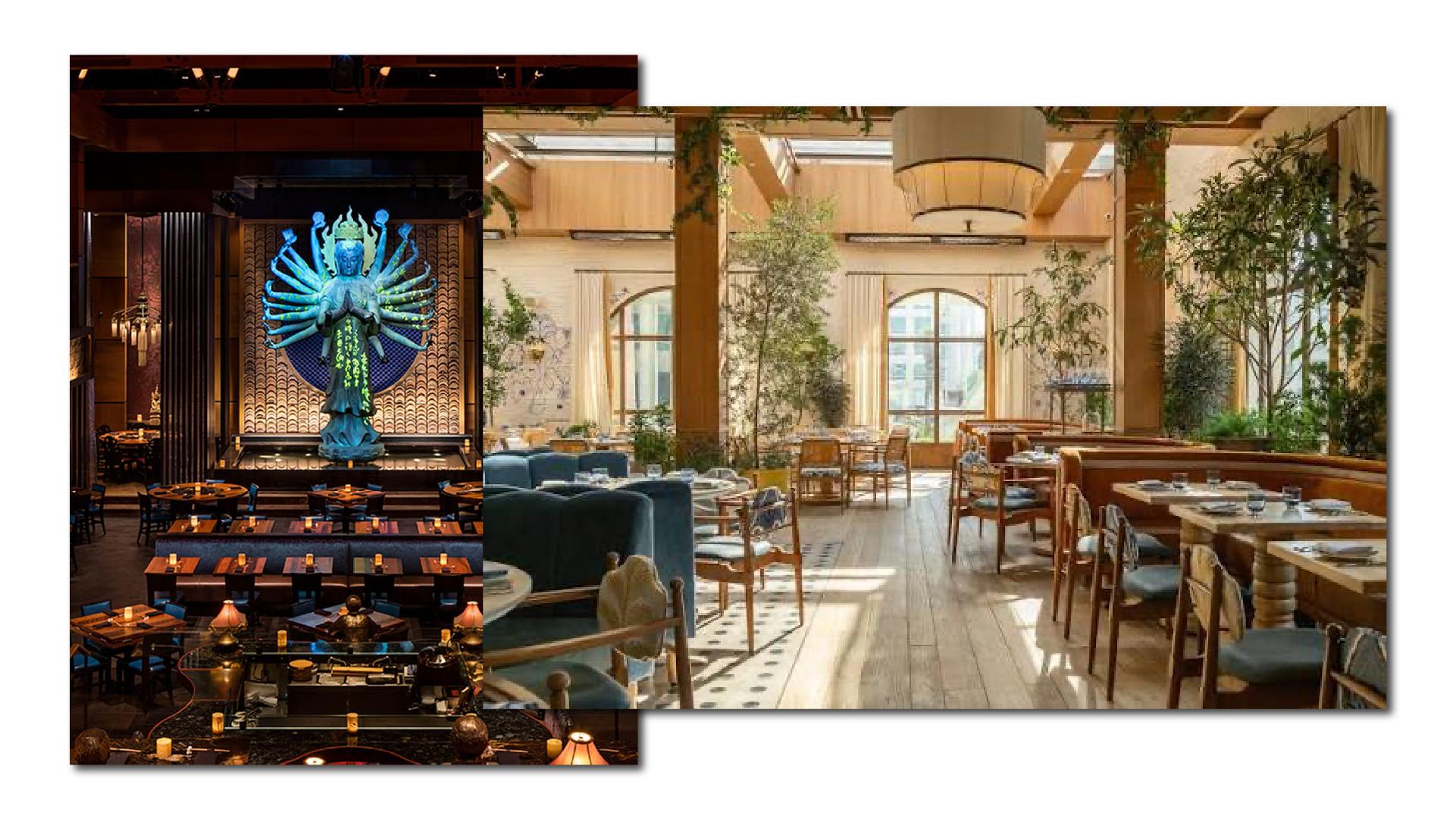
Tao's portfolio shows the alternative pattern. Each name is short, ownable, and semantically loose enough that it doesn't promise a specific dish or a specific address. A good sub-brand name should survive a change of city, a change of chef, and a change of format.
One more thing, and it belongs in the creative process rather than after it: check digital availability while you're still shortlisting, not once you've fallen in love. Domain, handles, and whether the name already belongs to someone else in search results. A name that already has an owner online is a name you'll pay for twice, once to create it and again to fight for it.
How a multi-brand group should show up online
The same architecture problem repeats on your website, and most group sites solve it badly.
The failure mode is the directory: a grid of logos, a paragraph of corporate language, and a link out to each concept. It's tidy and it's dead. It flattens every brand into a tile and gives the guest nothing to feel.
The other failure mode is the opposite: a group site so heavily art-directed that it imposes its own aesthetic over every concept, averaging four distinct personalities into one neutral house style.
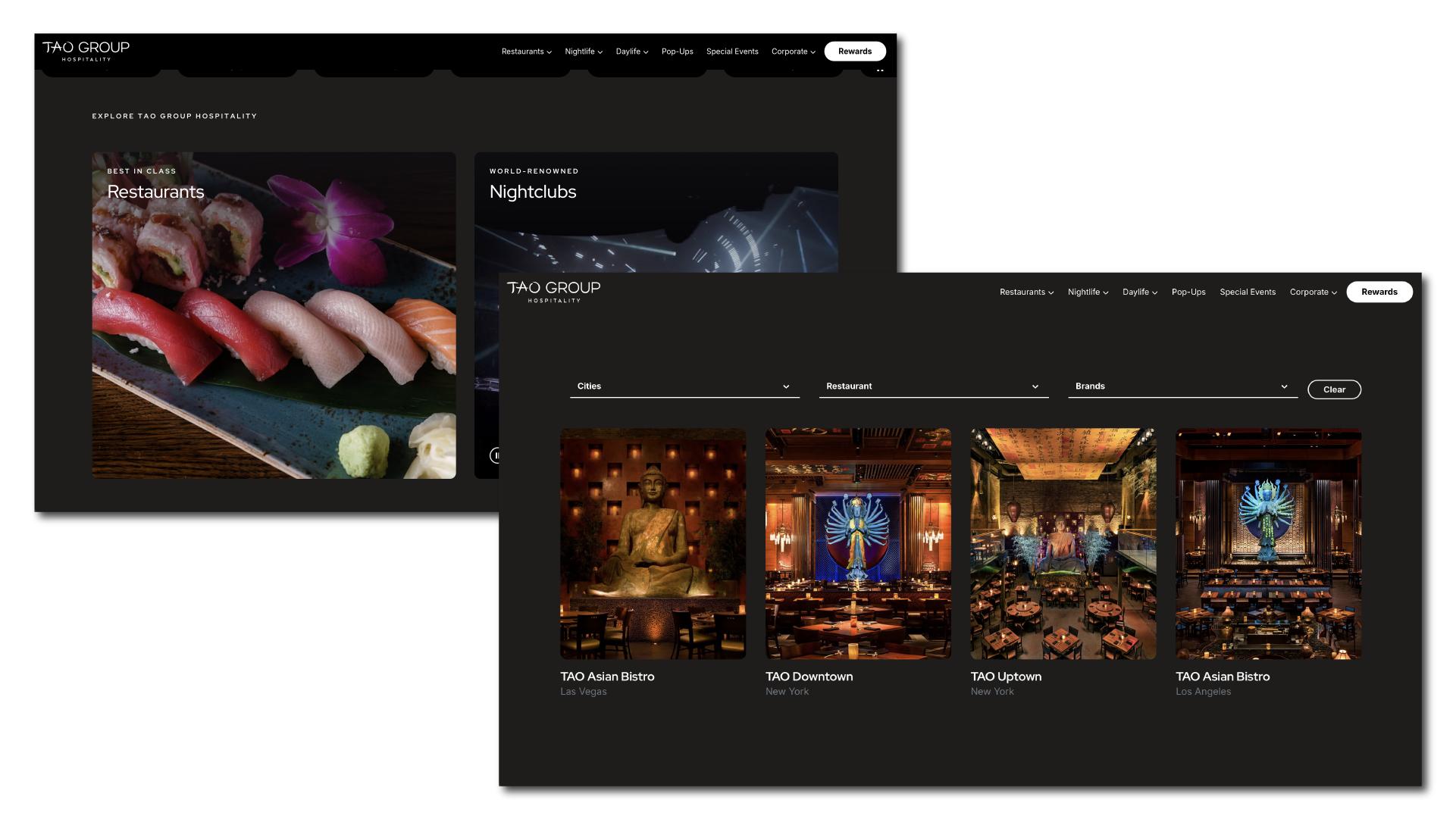
The useful way to think about it is that a group site has two audiences doing two different jobs. A guest arrives looking for one specific place, with a reservation or a menu in mind. A partner, journalist, investor or candidate arrives looking for the group itself. Building one page that tries to serve both is how you lose both.
So the hierarchy we recommend: each concept's page is that brand's house and should feel like it, with its own voice, imagery and rhythm. The group site is the reception, not the display case. Its job is to route people quickly, make the standard visible to partners, and get out of the way.
A group site should behave like an editor, not a template. Editors let each piece keep its voice while making sure the whole thing reads as one publication.
If you run a hospitality group, here are 3 things you could review tomorrow
1. Write down what your concepts actually share. One sheet, one column per concept. If the only honest answer is "the owner," that's the work. Other leaks to look for: every opening restarts the branding from scratch, nobody on your team can name the group's standards out loud, or two of your concepts are competing for the same customer on the same night.
2. Sort every brand element into visible or operational. Anything sitting in the wrong column is either strangling a concept's personality or leaving your team improvising something that should be a template.
3. Run the next-name test. Take the concept you want to open in two years, the one that doesn't fit the current pattern. If your naming logic and your site structure can't absorb it without a rebuild, your hospitality brand architecture isn't done yet. Better to find that out now than three months before a lease starts.