September 12, 2026
WHAT IS GEO AND HOW IT'S CHANGING SEO FOR BRANDS
Google now answers most searches before anyone clicks a single link. If your brand isn't part of that answer, you're not losing a ranking, you're losing the conversation. Here's what GEO actually is, and what it takes to be in the room when AI is doing the talking.
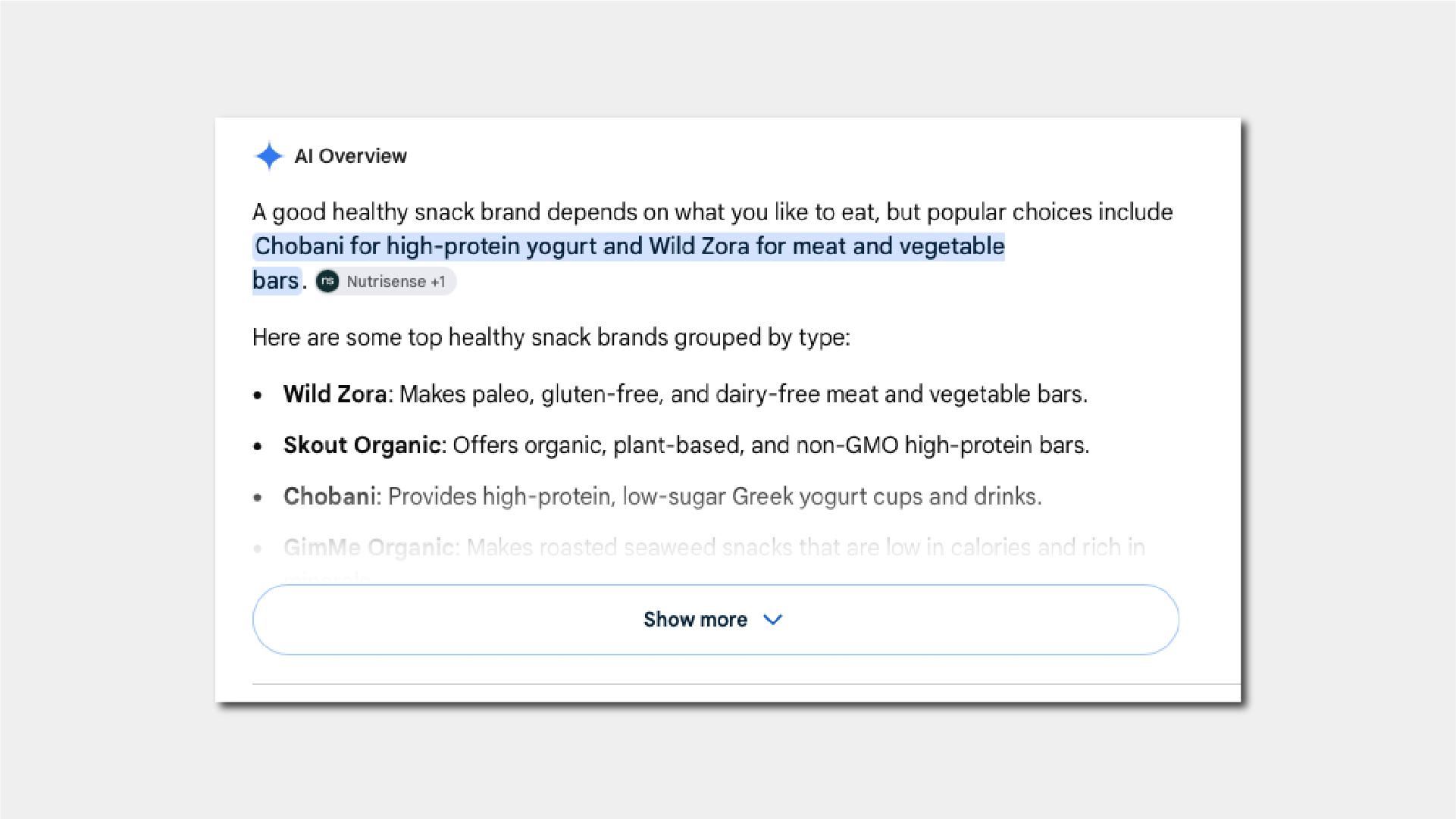
For twenty years, "showing up on Google" meant one thing: land on page one, get the click. That model is breaking. Type a question into Google today and there's a good chance you get a full answer before you ever see a blue link, generated on the spot by Google's AI Overviews, or increasingly by its AI Mode. Ask the same question in ChatGPT or Perplexity and you skip search results entirely. The answer just arrives, already written, already citing (or not citing) somebody.
That "somebody" is the new prize. Welcome to GEO.
What GEO Actually Means
Generative Engine Optimization (GEO) is the practice of positioning your brand so that AI systems, Google's AI Overviews and AI Mode, ChatGPT, Perplexity, Gemini, cite you, mention you, or recommend you when they generate an answer.
The shift is subtle but total. SEO optimizes for a position in a list. GEO optimizes for a mention inside a paragraph that a machine wrote. Nobody is scrolling past you to find a better result. Either the model brought you into the answer, or it didn't, and the user never knows you existed.
GEO vs. Traditional SEO: What Changes, What Doesn't
The two aren't rivals, they're stacked on top of each other. Here's the real difference:
Goal. SEO chases a ranking position. GEO chases a citation inside a generated answer.
Success metric. SEO tracks rankings, clicks, and traffic. GEO tracks how often you're mentioned, in what context, and with what sentiment, none of which shows up in a standard analytics dashboard.
What doesn't change. Technical health, structured data, and genuine authority (what Google calls E-E-A-T: Experience, Expertise, Authoritativeness, Trustworthiness) are still the foundation. An AI model can't cite a site it can't crawl, and it won't cite a source it doesn't trust. GEO isn't a replacement for SEO fundamentals. It's what you build once those fundamentals are solid.
Why This Matters for Brands Right Now
Every time an AI system answers a question directly, it shortens the research phase a customer used to spend browsing multiple sites before deciding who to trust. That's convenient for the user and dangerous for the brand that isn't in the answer.
Consider a luxury hotel comparing its own site rankings to a competitor's. If both sites rank equally well in classic search terms, but only one gets referenced when someone asks an AI assistant "what's the best boutique hotel in Tulum," the other one loses that customer before the browser even opens a results page. That's not a ranking problem. It's a visibility problem operating one layer above ranking.
What Actually Improves Your GEO
There's no shortcut here, but there is a clear list of what moves the needle:
Entity clarity. Your brand needs to be described consistently everywhere, your homepage, your About page, your schema markup, your social profiles. AI models build confidence in who you are from repetition and consistency, not from a single well-written page.
Extractable content. Long, meandering intros bury the answer a model is looking for. Content written to be quoted, short, self-contained paragraphs that answer a specific question directly, gets pulled into AI answers far more often than content that makes the reader (or the model) work for the point.
A quick contrast: "Our team has spent years thinking deeply about hospitality and what makes a stay memorable" tells a model nothing extractable. "Casa Luma has 12 rooms, no minimum stay, and is a 10-minute walk from Tulum's main beach entrance" is a sentence a model can lift and cite. Same brand, two very different odds of being quoted.
Presence beyond your own site. Reviews, press mentions, LinkedIn posts, YouTube, industry forums, these all feed the models that decide what to cite. If the only place your brand exists is your own homepage, you're invisible to a system that cross-references dozens of sources before answering.
A technical foundation that doesn't get in the way. Fast load times, clean structured data, a site architecture a crawler can actually parse. This is the same groundwork good SEO has always required. GEO just raises the stakes on getting it right.
What This Means for Your Website
Here's the part that tends to get missed: none of this lives in a marketing department in isolation. Entity clarity is an information architecture decision. Extractable content is a UX and copywriting decision. A crawlable, well-structured site is a design and development decision. GEO isn't a checkbox you add to a content calendar, it's a property of how the whole site is built.
That's precisely why this shouldn't be treated as a separate initiative bolted onto an existing site. It's a reason to look at site structure, content, and technical setup as one system, which is exactly the kind of work that shapes how we approach every build at Attlas.
GEO doesn't replace SEO. It's a new layer sitting on the same foundation SEO has always needed: a site that's technically sound, content that says something specific, and a brand that shows up consistently enough for a machine, or a person, to trust it on sight.