July 13, 2026
WHAT IS SCROLLYTELLING, AND WHEN DOES IT ACTUALLY WORK?
Scroll-triggered storytelling can turn a static page into an experience — but it's not free, and it's not always the right call. Here's how it works, and how to know if your project actually needs it.
What Scrollytelling Actually Means
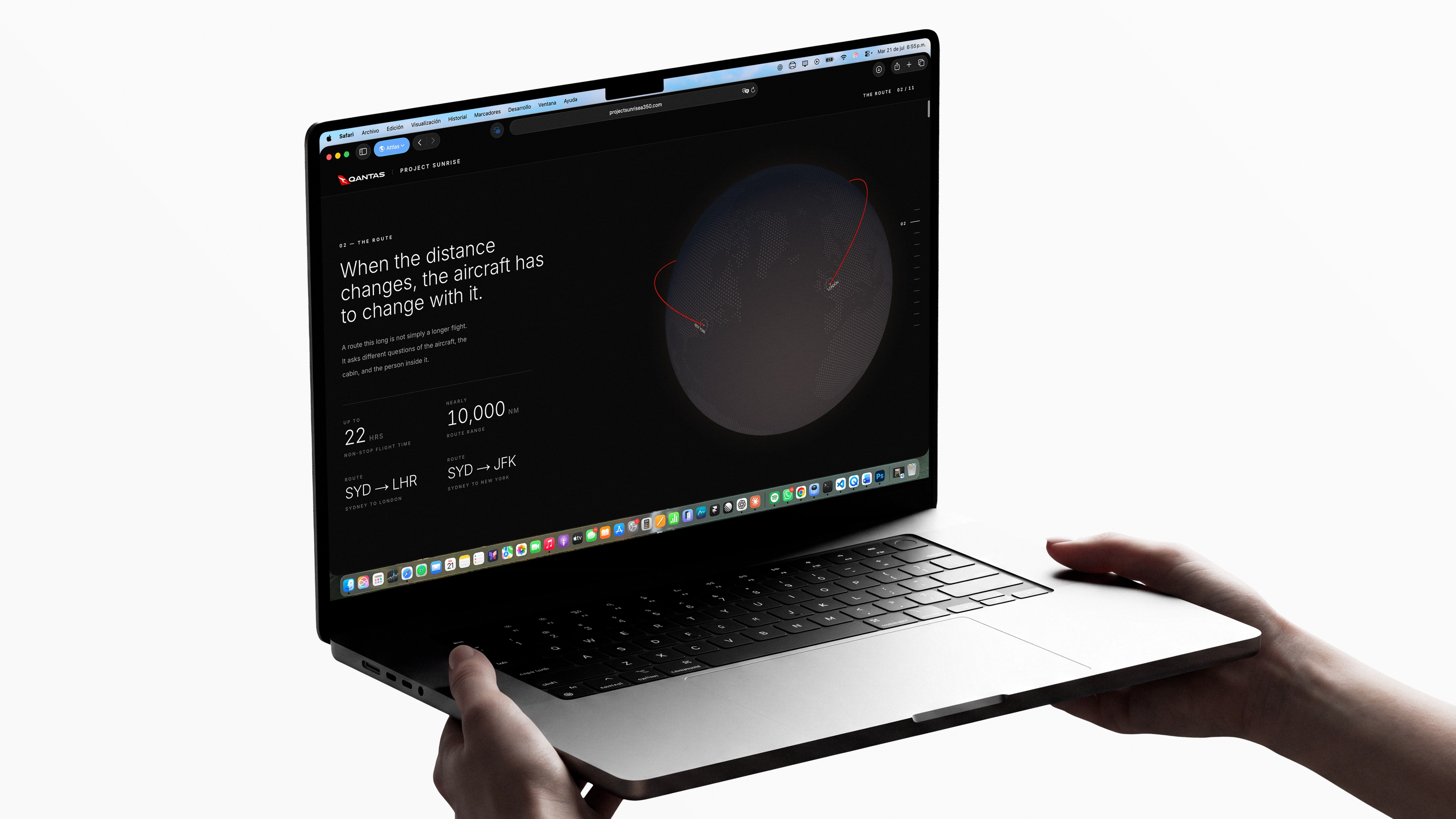
Scrollytelling is what happens when a website uses the act of scrolling as a storytelling device — not just to reveal content, but to control it. As the user scrolls, elements animate, transition, or reposition in sync with how far down the page they've moved. The scroll bar stops being a way to get to the bottom of the page and starts being a timeline.
That's the distinction worth holding onto. A lot of what gets called scrollytelling is really just parallax effects or scattered animations triggered on scroll — an image that fades in, a headline that slides up. Those are nice touches, but they're not scrollytelling on their own. Real scrollytelling has sequence and intent: scene one leads to scene two, which leads to scene three, and each one exists because it moves an argument or a story forward. If you removed the animation, you'd lose narrative continuity, not just polish.
Technically, this comes down to treating scroll position as a variable. Instead of scroll simply moving the page up and down, it becomes an input that drives what's on screen — which frame is showing, which text is visible, how far an element has moved along its path. The user's scroll becomes the pacing mechanism for a story that a developer has choreographed in advance.
How Scrollytelling Works in Practice
The mechanics usually follow a similar pattern: sections of the page become "sticky," staying fixed in place while other elements move, fade, or transform underneath or around them based on how far the user has scrolled within that section. Once the sequence tied to that section finishes, the page releases and moves on to the next one.
What matters more than the mechanics, though, is the planning behind them. Scrollytelling isn't something you bolt onto a finished design — it needs to be storyboarded before anyone touches a line of code. That means mapping out scenes the way you would for a short film: what's the opening frame, what changes and when, where's the emotional or informational peak, and how does it resolve. Teams that skip this step end up with animation that feels busy instead of narrative, because there was never actually a story being told, just motion for its own sake.
This is also why scrollytelling projects tend to involve a developer with real experience in scroll-based interaction from the start, not as an afterthought. The choreography between content, timing, and scroll behavior needs technical judgment early, or the whole sequence feels janky rather than intentional.
When Scrollytelling Makes Sense
Scrollytelling earns its place when a brand actually has a story to tell — not a product to sell in the next ten seconds, but something with a beginning, a middle, and a point. Product launches, founder narratives, case studies that walk through a process, or "about" pages that carry real weight are the natural home for this format. Anywhere the goal is for someone to understand a journey, not just scan a value proposition.
It also fits when a project's evolution is part of the pitch. Design studios, architecture firms, and craft-driven brands often have process worth showing — the sketch, the prototype, the final result — and scrollytelling can walk a visitor through that arc in a way a static gallery can't.
The common thread across all of these: the objective is immersion and time on page, not speed. If the win is measured in "the visitor understood who we are and remembered it," scrollytelling can deliver that in a way plain scrolling text rarely does.
When It Doesn't
The flip side matters just as much. Utilitarian pages — e-commerce category pages, service pages, pricing pages, anything where someone arrived with a specific task — are the wrong place for this format. If a visitor is trying to find information quickly, choreographed animation between them and that information is friction, not delight.
There are real risks worth naming, too. Scroll-triggered animation is heavier than static content, and mobile performance suffers first — long load times or janky scroll behavior undo whatever narrative effect you were going for. Accessibility is another serious concern: users relying on assistive scroll technology, or those with motion sensitivity, can have a genuinely bad experience with heavy scroll-jacking. And content that only appears through animation triggers can end up effectively invisible to search engines, which works against the very visibility you're trying to build.
The clearest warning sign is this: if a page needs to convert a visitor in the first ten seconds, scrollytelling is working against that goal, not for it. Immersive storytelling and fast conversion are different jobs, and trying to make one page do both usually means it does neither well.
The Business Case: What You Gain (and What You Risk)
What scrollytelling buys you, when it's used well, is engagement and memorability — the kind of differentiation that makes a brand stick in someone's head after they've closed the tab. In categories where every competitor's site looks and reads the same, a well-built narrative sequence can be the thing that actually gets remembered.
What it costs is real: more development time, more testing across devices, and more long-term maintenance, since scroll-based sequences tend to be more fragile than standard layouts when content changes down the line. That's not a reason to avoid it — it's a reason to be honest about when it's worth the investment.
The decision, ultimately, comes down to what kind of page you're building. A page built to move someone through a story deserves a format built for storytelling. A page built to move someone through a checkout flow deserves to get out of its own way. Scrollytelling done for the right project is a genuine asset. Scrollytelling done because it looked good on someone else's site is just weight your page has to carry.